The Silk Road, an ancient network of trade routes, once connected the East and the West, fostering the exchange of goods, ideas, and cultures. Today, it offers travelers a journey into China’s rich history, spectacular landscapes, and unique heritage. A trip through Xi’an and Gansu provides a vivid snapshot of this legendary path, where ancient cities meet stunning natural scenery and centuries-old traditions.
Xi’an: the starting point of history
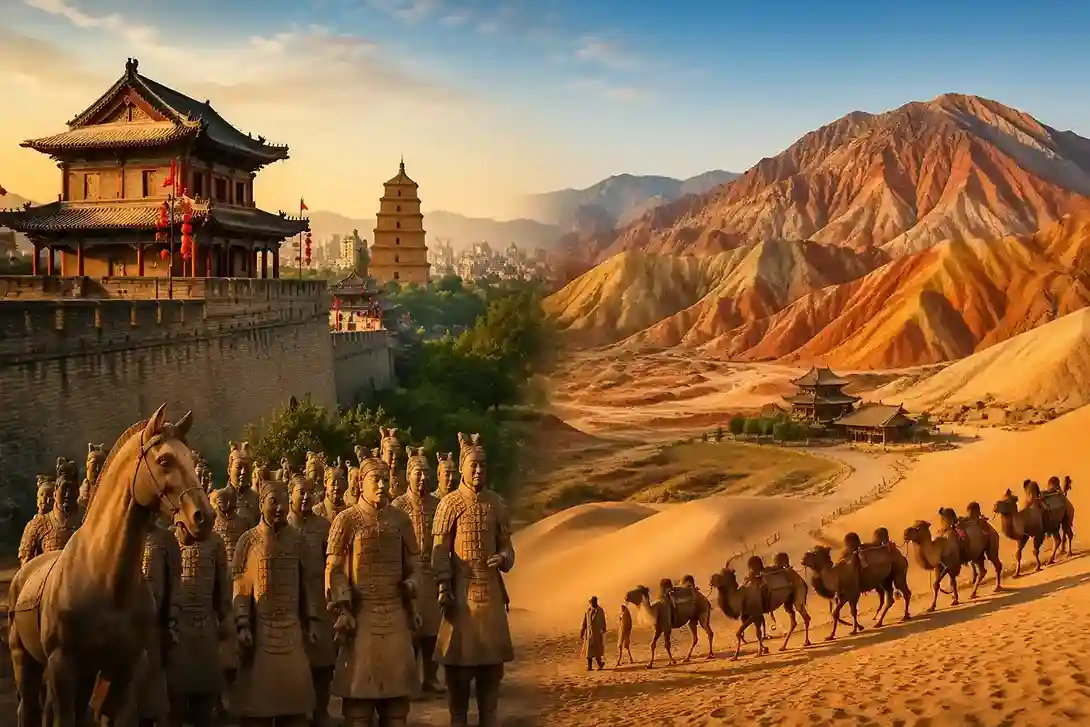
Xi’an, the former capital of several Chinese dynasties, is the eastern terminus of the Silk Road. The city’s most famous attraction is the Terracotta Army, a vast collection of life-sized sculptures depicting the armies of Emperor Qin Shi Huang. Walking among these figures, visitors can sense the grandeur and the meticulous craftsmanship of ancient China.
Beyond the Terracotta Army, Xi’an’s city walls and the Muslim Quarter reveal the city’s diverse cultural layers. The Muslim Quarter, with its bustling streets and vibrant markets, offers a taste of local street food, including the signature biangbiang noodles and freshly baked pastries. The ancient city walls, remarkably well-preserved, allow visitors to cycle or stroll while imagining the city’s strategic importance in the past.
Xi’an also houses the Big Wild Goose Pagoda, a symbol of Buddhist learning and a center of art and architecture during the Tang Dynasty. Its towering structure and serene gardens make it a tranquil contrast to the bustling city streets.
Gansu: gateways to the west
Heading northwest, Gansu province stretches along the Silk Road, presenting a diverse mix of desert landscapes, mountains, and oasis towns. Dunhuang, one of Gansu’s jewels, is home to the Mogao Caves, a complex of Buddhist grottoes adorned with exquisite murals and statues dating back over a thousand years. These caves reveal a rich tapestry of art, religion, and culture, illustrating the deep connections between China and Central Asia.
In addition to Dunhuang, Jiayuguan Fortress marks the western end of the Great Wall, a monumental defense structure that once protected the Silk Road routes. The fortress and surrounding desert landscapes offer a glimpse into the logistical challenges and strategic thinking of ancient China. Travelers can also explore Zhangye, known for its Rainbow Mountains, where layers of colorful sedimentary rocks create a surreal panorama, ideal for photography and hiking.
Experiencing local culture
Immersing in local culture is an essential part of the Silk Road journey. In Xi’an, visitors can attend traditional performances such as the Tang Dynasty Music and Dance Show, which brings historical court life to vivid life through music, costumes, and choreography. Markets and tea houses offer further opportunities to engage with local customs and taste authentic flavors.
In Gansu, small towns and villages provide encounters with ethnic minorities, including the Tibetan and Hui communities. Visitors can experience local crafts, traditional music, and culinary specialties. Dishes like hand-pulled noodles, lamb skewers, and fresh dumplings showcase the blending of Chinese and Central Asian culinary influences. Participating in cultural festivals and local rituals adds a memorable layer to the journey, making history tangible and personal.
Practical route and itinerary
Planning a Silk Road trip requires balancing historical sites, natural landscapes, and cultural experiences. Starting in Xi’an, travelers typically spend two to three days exploring the city and its surroundings, including the Terracotta Army, city walls, and vibrant market areas. From Xi’an, high-speed trains or flights connect to Lanzhou, the capital of Gansu, which serves as a hub for onward journeys to Dunhuang, Jiayuguan, and Zhangye.
Here is a suggested itinerary overview:
| Day | Location | Main attractions | Notes |
|---|---|---|---|
| 1-2 | Xi’an | Terracotta Army, Big Wild Goose Pagoda, Muslim Quarter | Evening strolls and local cuisine |
| 3 | Xi’an | City walls, Small Wild Goose Pagoda | Biking along walls |
| 4 | Lanzhou | Zhongshan Bridge, Yellow River views | Travel hub for Gansu exploration |
| 5-6 | Dunhuang | Mogao Caves, Crescent Lake, Singing Sand Dunes | Early morning desert tours recommended |
| 7 | Jiayuguan | Jiayuguan Fortress, Great Wall western end | Optional camel rides in desert |
| 8 | Zhangye | Rainbow Mountains, Giant Buddha Temple | Hiking and photography |
This table illustrates how to distribute time and highlights key experiences, ensuring travelers can enjoy a balanced mix of history, nature, and culture. Proper pacing allows for immersive exploration without feeling rushed, making the Silk Road journey memorable.
Connecting history with nature
The Silk Road is not only about cities and monuments; it also leads through dramatic landscapes. From the Yellow River valley in Gansu to the deserts surrounding Jiayuguan, the natural scenery offers both beauty and historical context. Travelers witness the environmental challenges that ancient traders faced while moving goods along these routes.
The Rainbow Mountains in Zhangye, with their vivid mineral layers, are among the most striking examples of nature’s artistry along the Silk Road. Hiking trails and viewing platforms provide safe access to these geologic wonders, combining adventure with a sense of connection to the region’s history. Similarly, the deserts near Dunhuang offer unique experiences, such as sandboarding or camel trekking, allowing travelers to engage actively with the environment.
Tips for a successful journey
To make the most of a Silk Road trip, practical considerations are essential. Accommodation options range from boutique hotels in Xi’an to desert guesthouses near Dunhuang. Booking in advance is recommended, especially during peak tourist seasons. Transportation within Gansu often requires planning, as distances are significant and public transport options can be limited.
Health and safety are also important. Travelers should prepare for variable climates, from hot, arid deserts to cooler mountainous areas. Packing layered clothing, sunscreen, and plenty of water ensures comfort during long excursions. Learning a few basic phrases in Mandarin can facilitate interactions with locals and enrich cultural experiences.
- Carry a detailed map of the route and offline navigation tools.
- Sample regional foods but follow hygiene precautions.
- Engage with local guides for historical insights.
- Take time to explore markets, craft shops, and cultural performances.
By preparing thoughtfully, travelers can enjoy a seamless and enriching journey that blends history, culture, and nature along one of the world’s most legendary trade routes.
Conclusion
Traveling through Xi’an and Gansu offers a rare opportunity to walk in the footsteps of ancient merchants and explorers. From the Terracotta Army to the colorful deserts of Gansu, each stop reveals layers of history and culture. Combining historical landmarks with natural wonders and immersive cultural experiences, the Silk Road remains a route that captivates the imagination and provides a deep, tangible connection to the past. For modern travelers, this journey offers not only spectacular sights but also an understanding of the enduring legacy of one of the world’s greatest trading networks.