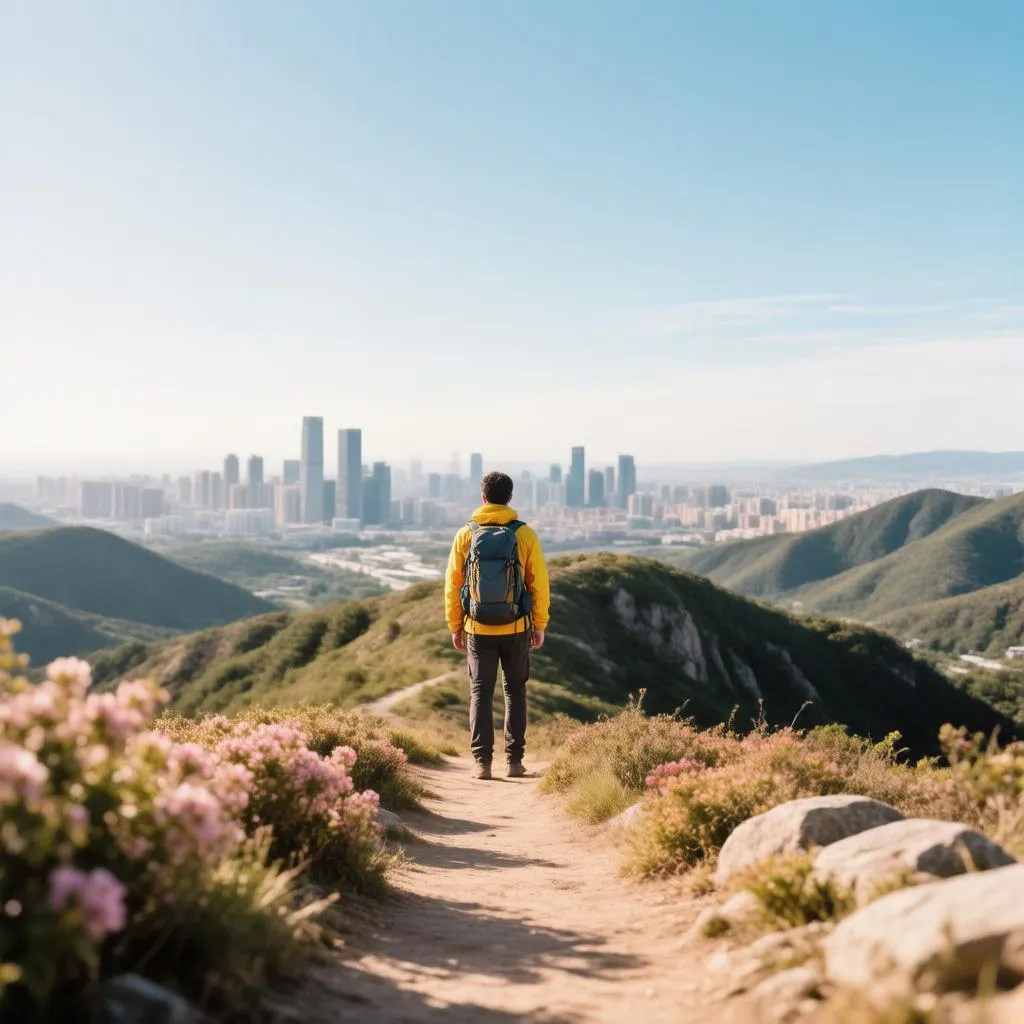
Some of the world’s best walks never appear on trekking maps. They begin where a metro line ends, or a public bus drops hikers at a trailhead twenty minutes from downtown, and by lunchtime they deliver views that huts and porters usually guard on multiday expeditions. The rise of the urban day hike is one of travel’s quieter revolutions: people with ordinary holidays, staying in ordinary hotels, discovering that the mountain does not always require the flight and the tent — sometimes it is simply across the river. What follows is a tour of the day hikes that have earned this reputation, chosen for a single criterion above all: how little stands between a city morning and a mountaintop afternoon.
What makes a great city-edge hike
Not every trail near a city deserves the name. The best urban day hikes share a set of traits that separate them from the paved park loops and the dangerously forgotten footpaths:
- Public transport access — the trailhead reachable by metro, bus or minibus without a rental car, because the point of the day hike is its lightness.
- Meaningful payoff — a summit, a waterfall, a viewpoint or a coastline that justifies the effort, not merely exercise.
- Escape value — once on the trail, the city should disappear within thirty minutes; noise, towers and traffic should be gone.
- Safety and signage — marked routes, known opening logic, and a trail that locals genuinely use rather than one abandoned to guesswork.
- Time budget — a complete round trip achievable between breakfast and dinner, including transport.
These five filters eliminate hundreds of so-called city trails and leave a short global list. The walks that survive it differ enormously in climate, difficulty and scenery — which is precisely their charm.
Cape Town: Lion’s Head and the Table Mountain network
Cape Town may hold the world’s best city-hike ratio. Table Mountain itself, a flat-topped sandstone mass rising over a thousand metres straight from the city bowl, offers several full-day routes; but the morning favourite is Lion’s Head, the smaller peak beside it. A spiral path wraps the hill’s flanks, crosses two short ladders and steel staples bolted into the rock, and delivers a 360-degree panorama of the city, Table Mountain, the Atlantic and Robben Island within ninety minutes of effort. Locals do it at sunrise and full moon with headlamps; visitors fit it into any morning. Transport to the trailhead takes fifteen minutes from the city centre, and the entire adventure fits before brunch — a detail Cape Town hikers treat as a badge of honour.
For the fuller day, the Platteklip Gorge route climbs Table Mountain itself in about two hours of relentless stone steps, with the cable car available for the descent and a café on the summit plateau. The mountain’s characteristic “tablecloth” of cloud can close the summit without warning, which is why locals check the wind forecast before committing — a habit worth borrowing wherever mountains meet coasts.
Medellín: the green lungs of the valley city
Medellín transformed itself over two decades from a city people fled into a city people fly to, and its surrounding hills hold hikes that few visitors suspect exist. The Metrocable — a cable car system built as public transport for hillside neighbourhoods — carries passengers from the metro straight into the mountains, which turns hiking logistics into a tram ride. The standout options:
- Cerro El Volador — an ecological park ten minutes from the metro, with forested ridgelines, paragliders launching overhead and a complete loop of two hours; the easiest genuinely wild-feeling walk inside city limits.
- Aranjuez and the northern hills — neighbourhood trails connecting the working-class comunas, where the walk doubles as a portrait of the city’s social geography.
- Cerro de las Tres Cruces — a short, steep climb to three crosses above the valley, popular at sunset when the whole Aburrá valley glows.
- Farallones de Cali and the Antioquia foothills — for the full-day option, buses from the city’s northern terminal reach trailheads toward the Chingaza-adjacent ranges, where orchid forests replace city noise entirely.
Medellín’s eternal spring climate removes the main obstacle of tropical hiking — heat — and the metro system makes every trailhead a twenty-minute commute. Few cities on earth offer this ratio of effort to reward.
Hong Kong: the world’s most surprising hiking city
Ask which metropolis holds the best trail network and the answer surprises most first-timers: Hong Kong. Forty per cent of the territory is protected country park, threaded with hundreds of kilometres of marked trails, and the densest metro system in Asia delivers hikers to mountain starts in minutes. The Dragon’s Back, on Hong Kong Island itself, has been repeatedly ranked among the world’s best urban hikes — a ridge path along green spines with the South China Sea glittering below, ending at a beach where swimmers cool off. The Peak Circle Walk offers an easier loop with the harbour panorama, while the MacLehose Trail sections in the New Territories deliver mountain ridges and hidden beaches on routes reachable by MTR and minibus. What Hong Kong proves is a principle this whole list rests on: hiking quality has nothing to do with a city’s size, and everything to do with what its planners decided to protect.
The wider map: other cities that belong on this list
Beyond the three headliners, a dozen cities across the continents hold single-day hikes that justify entire flights. The highlights, each reachable from its city centre within an hour:
| City | Hike | Time | Level | The payoff |
|---|---|---|---|---|
| Rio de Janeiro | Pedra Bonita or Dois Irmãos | 1.5–2 hours | Moderate | The city, beaches and Sugarloaf from above |
| Athens | Mount Lycabettus and Ymittos ridge | 1–3 hours | Easy to moderate | The Acropolis from a pine-covered summit |
| Barcelona | Collserola and Tibidabo | 2–5 hours | Easy | The Mediterranean from a forested massif at the city’s edge |
| San Francisco | Lands End and the Presidio trails | 1–4 hours | Easy | Coastal cliffs, the Golden Gate bridge views |
| Santiago | Cerro San Cristóbal and San Ramón | 2–5 hours | Easy to demanding | The Andes wall looming over the city |
| Los Angeles | Runyon Canyon and the Hollywood trails | 1–2 hours | Easy | The famous sign, canyon ridges and ocean light |
| Nairobi | Karura Forest and Ngong Hills | 2–4 hours | Easy to moderate | Indigenous forest, waterfalls and colobus monkeys |
| Oslo | Nordmarka forest trails | 2–6 hours | Variable | Lakes, forest and midnight-sun summer evenings |
| Auckland | Rangitoto Island summit | 4–5 hours | Moderate | A volcanic cone rising from the harbour itself |
Reading the map, a pattern emerges: the best city hikes cluster in cities whose geography forced wildness to remain close. Coastal ranges, volcanic cones and protected parkland at the urban edge are accidents of geography, but the trails themselves are deliberate — the results of decades of public investment in access.
The practical craft of the urban day hike
A city day hike succeeds on preparation more than fitness, and the rules are short enough to memorise. They apply from Cape Town’s sandstone to Medellín’s cable-car hills alike:
- Start before nine — both for the light and for the afternoon storm windows that affect mountain weather on every continent.
- Carry more water than feels necessary — urban trailheads rarely have refill points, and a two-hour climb in any summer sun consumes a litre.
- Dress in removable layers — the temperature gap between a shaded valley and a sun-exposed summit can exceed ten degrees even in the tropics.
- Check the return transport schedule first — the most common urban hiking failure is completing the walk and finding the last cable car, bus or funicular long departed.
- Tell someone the route — even on marked, popular trails, the habit costs a message and covers every contingency.
- Download the map offline — urban fringes are exactly where mobile coverage collapses into dead zones, and the trail signs rarely compensate.
None of these rules requires equipment beyond a daypack, and their combined effect is the difference between an adventure and an anecdote told in an emergency room. The craft matters most precisely because the hikes themselves are easy to underestimate — they sit next to cities, look casual from the windows, and hide their exposure in plain sight.
When the city hike becomes the whole trip
There is an argument that the day hike is not a compromise between city travel and mountain travel, but the superior form of both. A multiday trek demands a holiday built around it; a city walk competes with museums and dinner reservations; but the urban day hike borrows the strengths of each — the comfort of a city base, the intensity of a mountain morning — and stacks them into a single day. Travellers who build entire itineraries this way report a curious effect: they see the city twice, once from its streets and once from the ridge above it, and the two views correct each other. The capital looks different from a mountaintop at nine in the morning than it does from a café at noon; the mountain looks different when its trails empty of locals who use them as everyday commutes rather than destinations. The best city hikes do not take travellers away from the city — they show them what the city was shaped by all along.