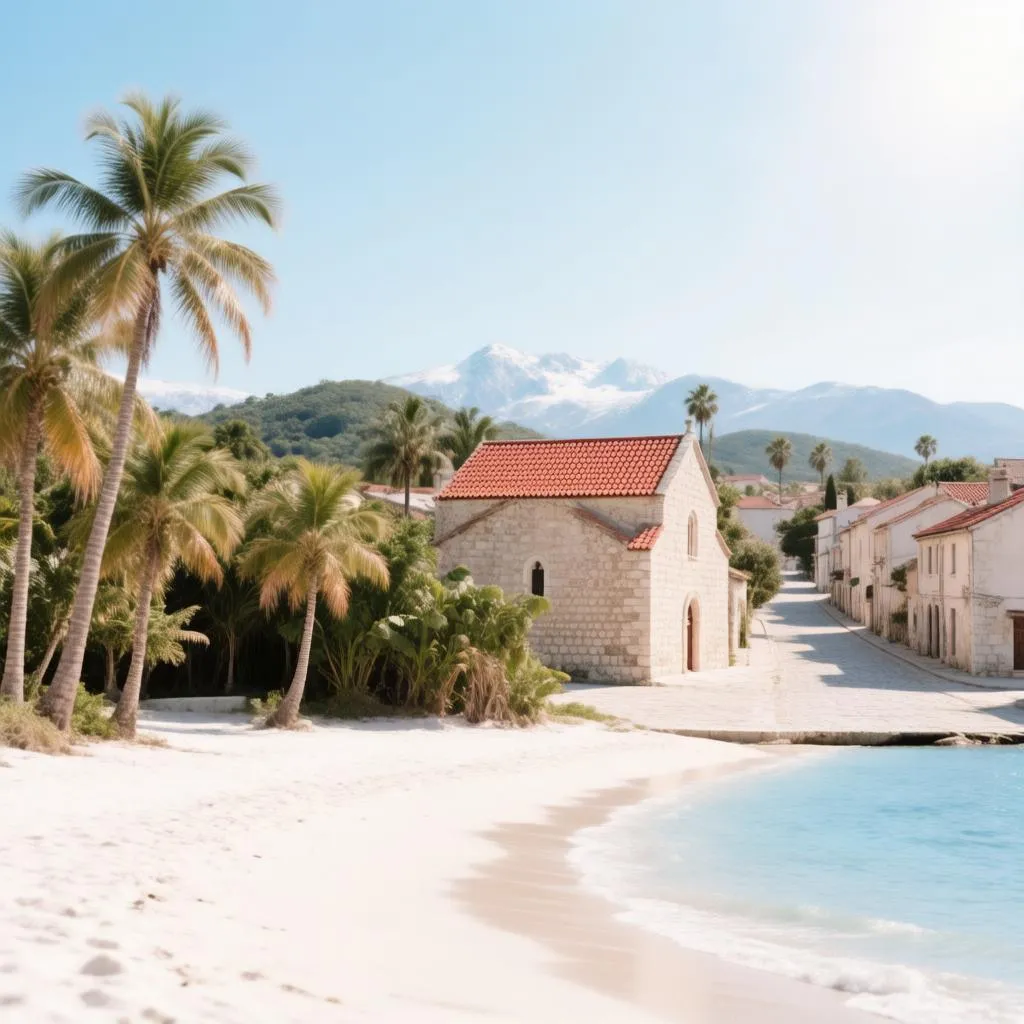
Every year, the second week of January performs a strange trick on the travel industry: the world’s most photogenic destinations suddenly behave as if nobody wants them. The airports that were jammed on the third of the month are calm by the fifteenth; hotels that doubled their rates for the holidays return to prices unseen since early autumn; and tour operators, guides and boat captains start answering messages within minutes instead of days. This is not a glitch but a cycle, and it lands every year with almost mechanical reliability — the post-holiday trough, when demand collapses worldwide and prices follow. January 2027 will be no exception, and two regions sit at the heart of the window: Southeast Asia, where the mainland’s dry north contrasts with the rainy south and rates fall accordingly; and the Balkans, where the Adriatic empties of summer entirely while its mountains fill with snow and bargain skiers. Understanding how these two quiet seasons work — and where they overlap with genuine winter sunshine rather than genuine winter misery — is the whole art of the January trip.
Why January prices drop, in two acts
The trough is not a marketing invention; it is arithmetic. Tourism runs on supply that stays fixed and demand that swings wildly, and January is the deepest swing of the demand calendar in two very different regions for two very different reasons.
In Southeast Asia, the mechanism is the monsoon calendar. January is the tail of the wet season across much of the southern and central region — Bali’s rainiest month, the wettest stretch on Vietnam’s central coast, afternoon storms through much of the Malay archipelago. The beach tourism that dominates the region simply redirects: northern Thailand, Laos and northern Vietnam enter their cool, dry, perfect months, and demand pools there while the southern islands empty. The result is a region with two price systems operating at once — high season in the north, low season in the south — and travellers who know which side of the rain line they want can pick their economy.
In the Balkans, the mechanism is simpler: it is the sea. The Adriatic coast that powers the region’s entire tourism economy — Dubrovnik, Kotor, Split, the Albanian riviera — is a summer product, and January removes it from the market almost literally. Coastal hotels drop to a fraction of their summer rates or close entirely; restaurants that served a thousand covers in August serve twenty in January; ferries run a skeleton schedule or none. What the region offers instead is its mountains: Bosnia’s Bjelašnica and Jahorina, Montenegro’s Durmitor, Bulgaria’s Bansko — ski terrain with snow at a fraction of Alpine prices. January in the Balkans is a region that has changed its whole economy for the winter, and the traveller who plans for the winter version rather than mourning the summer one finds a completely different country at completely different prices.
Southeast Asia in January: the two maps
The region’s January splits into a dry north and a wet south, and the deals sit in different places on each map. The dry north — northern Thailand, Laos, Cambodia’s interior, northern Vietnam — is technically peak season: cool air, blue skies, empty humidity, and the region’s most reliable travel conditions. Prices there are reasonable rather than discounted, and the value comes from conditions rather than bargains. The wet south is where the discounts live, and the pattern repeats across the archipelago:
- Bali and the Gili islands — the year’s wettest month, with villa and hotel rates at their floor and the crowds of July replaced by afternoon showers that pass within an hour or two.
- Vietnam’s central coast — Hoi An and Da Nang in their rainiest stretch, with the ancient town belonging to locals rather than tour groups and rates 30–40 per cent below the March peak.
- The Andaman coast of Thailand — Phuket and Krabi wetter in January than the Gulf islands, with resort prices dipping accordingly while Koh Samui across the peninsula sits at its dry, premium peak.
- The Philippines’ central islands — Cebu and Bohol carry decent weather early in the month with the eastern Visayas cloudier later, and the low-season pricing on domestic flights makes island-hopping unusually cheap.
The honest rule for the wet side of the map is that rain in January across the tropics tends to arrive as afternoon performances rather than all-day cancellations. Mornings typically clear; boats may run late; the beach day may become the temple-and-café day. Travellers who build their itineraries around a morning anchor and an open afternoon lose almost nothing, and they pay the year’s lowest rates for the privilege.
The Balkans in January: two different countries
The January Balkans are really two regions wearing one map. The coastal side — Croatia’s Dalmatian towns, Montenegro’s bay, Albania’s riviera — is almost a ghost of itself, and for many travellers that is precisely the appeal: Dubrovnik’s walls walked in silence, Kotor’s lanes owned by cats, Split’s promenade filled with locals drinking coffee in the winter sun. Coastal temperatures hold between 8 and 15 °C, sunny days are frequent, and the towns that charge August rents charge a fraction of them. Caveats exist and matter: some coastal hotels and restaurants close entirely from November to March, ferry services thin to weekly runs, and travellers should confirm opening hours before building a coastal plan around a specific restaurant or tour.
The mountain side is where the Balkans become a snow product. Bulgaria’s Bansko has built one of Europe’s best-value ski economies, with lift passes, lessons and après-ski running at half or less of Alpine equivalents; Bosnia’s Jahorina and Bjelašnica, the Olympic mountains above Sarajevo, offer the same arithmetic with a side of 1980s nostalgia; Montenegro’s Durmitor and Kosovo’s Brezovica remain the quiet end of the market, with lift queues measured in seconds and guesthouses that treat a visitor as a guest rather than a transaction. Adding a mountain week to a January Balkans trip costs, in many cases, less than a single weekend in the Alps.
What the month is worth, in numbers
The savings across both regions are large enough to fund an extra week, and the comparison below shows the January picture per traveller per day, with the flight costs from a Western European hub added for the complete arithmetic:
| Destination segment | January daily spend | Peak season daily spend | Return flight (January) |
|---|---|---|---|
| Northern Thailand and Laos | $40–70 | $55–95 | $550–750 |
| Southern Thailand and Bali | $30–60 | $55–100 | $550–800 |
| Vietnam (central and north) | $30–55 | $50–90 | $500–700 |
| Adriatic coast (Croatia, Montenegro, Albania) | $35–65 | $80–140 | $100–250 |
| Balkan ski resorts (Bulgaria, Bosnia, Kosovo) | $40–80 | $90–170 | $100–250 |
| Sarajevo, Belgrade and the city layer | $35–70 | $60–110 | $100–200 |
Read together, the two halves of the table tell one story. Southeast Asia’s January advantage sits almost entirely on the ground: flights hold steady through the winter, but hotels, guides and food cost 30 to 45 per cent less than their peaks, which converts into extra weeks rather than a discount on the same week. The Balkans’ advantage is double-layered: ground costs fall 40 to 50 per cent and flights from Europe cost less than a domestic rail ticket, which makes a January Balkans week the cheapest long-distance trip available to most European travellers. The arithmetic explains why January regulars return every year — the same money buys either ten days in the tropics or fourteen in the Balkans, with change left for the good restaurants.
The trade-offs, and how they are beaten
Low-season travel has real costs, and pretending otherwise is how January trips get ruined. The honest list of what January removes, along with the standard fixes experienced travellers use:
- Reduced services on coasts and islands — beach clubs, boat trips and some hotels close for the winter; the fix is confirming opening schedules before booking and treating the coast as a bonus rather than the trip’s centre.
- Rain in the southern tropics — the monsoon’s tail is real, concentrated in afternoons, and best met with flexible days rather than waterproof patience.
- Winter bus and ferry schedules in the Balkans — timetables published for summer do not survive the season, and every transport connection in January should be re-verified from the winter schedules, not the guidebook.
- Short daylight hours in Europe — the Balkan winter sun sets before five, which compresses sightseeing into mornings and makes the evening meal the day’s social anchor rather than an afterthought.
- Thinner tour calendars — guides and operators run fewer departures in January, and fixed-day experiences such as cooking classes or safari days should be booked ahead rather than hoped for.
None of these trade-offs is fatal, and all of them are cheaper than the peak-season alternative. The traveller who accepts them purchases the one commodity peak season never sells: a destination at its most local, working at its own pace, with room at the table for whoever arrives.
The booking playbook for January 2027
Timing the purchase matters as much as choosing the destination, and January’s dynamics differ enough from peak-season planning to deserve their own sequence:
- Lock long-haul flights by late October or early November — Southeast Asia fares for January hold low through November and begin climbing in December as holiday travellers book their winter escapes; the comfortable window is measured in months, not days.
- Hold short-haul flights until November’s sale windows — European carriers discount the January trough repeatedly, and the Balkans routes routinely price below their September levels.
- Book the mountains early, the coasts late — ski guesthouses in Bansko and Jahorina fill for school holidays even in January, while Adriatic coastal rooms are abundant until days before arrival.
- Anchor one fixed experience per destination — the January tour calendars are thin, and booking the guided day in advance protects the structure that the rest of the schedule can flex around.
- Leave the last week of January open if possible — the trough deepens after mid-month, and late-January travellers often find the year’s absolute minimum prices on both flights and rooms.
The sequence rewards a particular temperament: book the unavoidable early, book the improvable late, and let the weather — which January guarantees in some form, everywhere — have the final word on the middle days.
The quiet month worth claiming
January 2027 offers what the travel calendar rarely manages: two regions at their price minimums for opposite reasons, at the exact moment most of the world has stopped travelling. The deals are real, measurable and repeatable, but they are not unconditional — the tropics’ south asks for tolerance of afternoon rain, the Balkans ask for planning around winter schedules, and both ask for the flexibility that turns reduced services from a disappointment into a freedom. The reward, for travellers willing to meet those terms, is a season of empty lanes in Hoi An, silent walls in Dubrovnik, snow at student prices above Sarajevo, and hotel rates that make the guidebook’s luxury tier affordable. The peak season sells a destination at its busiest and most expensive; January sells it at its most itself — and the month’s loyal regulars know that this quieter, cheaper version is not the consolation prize. It is the prize.