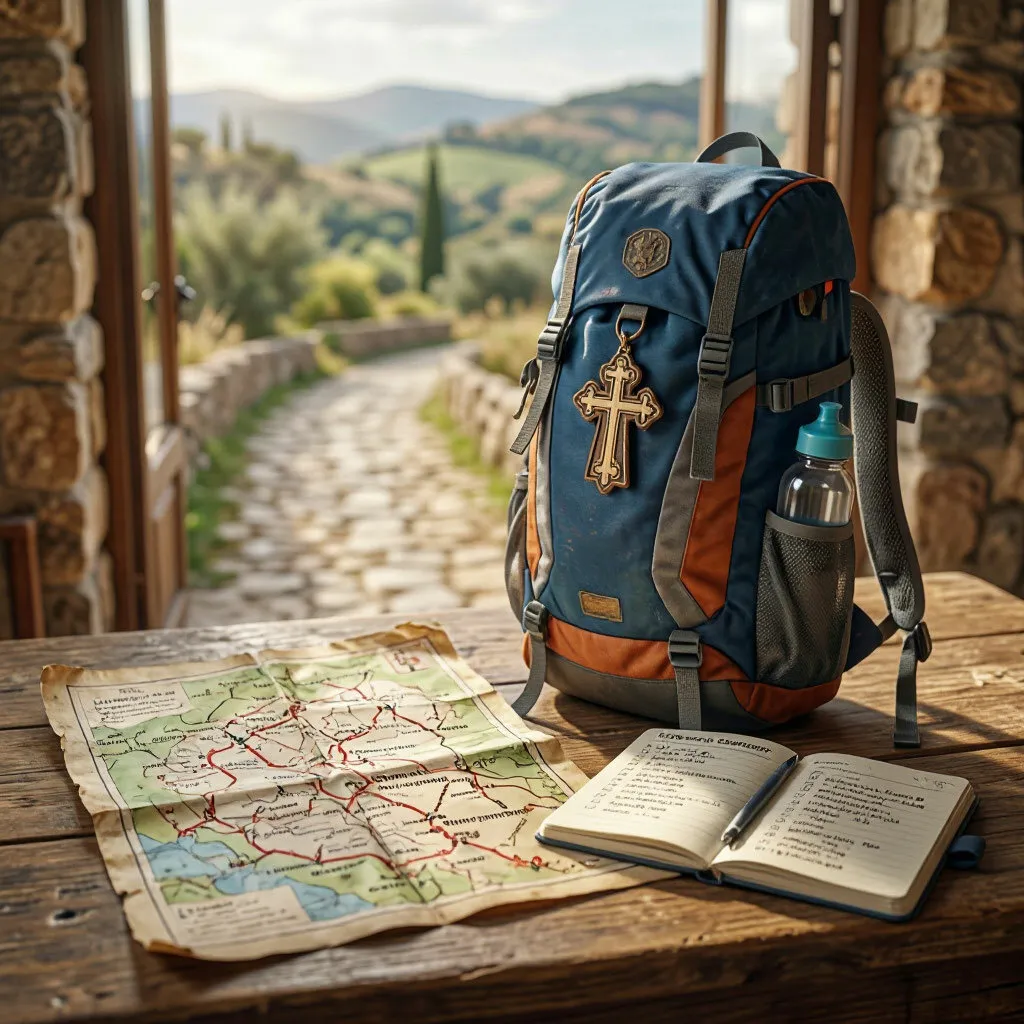
There is a moment on the Camino de Santiago — usually around day four or five — when your body stops fighting the walk and starts belonging to it. The blisters have settled into a dull background ache, your pack no longer feels like a burden but like an extension of your shoulders, and the rhythm of your footsteps takes on a meditative quality that no guidebook can prepare you for. People have been walking to Santiago de Compostela for over a thousand years, and the reason has never been purely religious. It is the simplicity. Every day, you wake up, walk, eat, sleep, and repeat. No emails, no deadlines, no decisions more complicated than where to stop for coffee and whether the next albergue has free beds. In a world engineered to keep you distracted, the Camino strips everything back to the essentials, and that stripping-away is what keeps hundreds of thousands of people coming back every year.
The main routes compared
The Camino is not one path but a network of routes spreading across Europe like veins converging on a single point — the cathedral in Santiago de Compostela, where the remains of Saint James are said to lie. Each route has its own character, difficulty, scenery, and crowd levels, and choosing the right one is the most important decision you will make before lacing up your boots.
The Camino Francés (French Way) is the iconic route, the one most people picture when they hear “Camino de Santiago.” Starting in St. Jean Pied de Port on the French side of the Pyrenees, it covers 780 kilometers to Santiago in roughly 35 days. It passes through Pamplona, Logroño, Burgos, and León, crossing the meseta — the vast, flat plateau of central Spain that is simultaneously the most boring and most profound stretch of the entire walk. The infrastructure is unmatched: albergues (pilgrim hostels) every few kilometers, well-marked trails, and a community of walkers so large that you will form friendships within the first week. The downside is the crowds — in peak season, you may be sharing the trail with hundreds of other pilgrims, and popular albergues fill by noon.
The Camino Portugués (Portuguese Way) runs from either Lisbon or Porto north through Portugal into Galicia. The full Lisbon-to-Santiago route is about 620 kilometers (25–28 days), while starting in Porto gives you a more manageable 240 kilometers (10–12 days). It is quieter than the Francés, flatter, greener, and passes through Portuguese towns and vineyards before crossing into Spain at Tui. The coastal variant from Porto follows the Atlantic coastline and is gaining popularity for its ocean views and milder climate.
The Camino del Norte (Northern Way) follows the northern Spanish coast from Irún to Santiago, covering about 825 kilometers in 35–40 days. It is the most physically demanding of the major routes, with constant climbs and descents along coastal cliffs, but the scenery is the most dramatic — rocky coves, green hills, and the Bay of Biscay stretching to the horizon. Infrastructure is thinner than the Francés, meaning fewer albergues and longer days between stops, but the sense of solitude and wild beauty rewards those willing to work for it.
The Camino Primitivo (Original Way) is the oldest route, starting in Oviedo and joining the Francés at Melide for the final 100 kilometers. At 320 kilometers (12–14 days), it is shorter than the Francés but more mountainous, crossing the rugged interior of Asturias with steep ascents and remote mountain villages. It appeals to walkers who want a challenge and a taste of the Camino as it was centuries ago — quiet, raw, and physically demanding.
The Via de la Plata (Silver Way) starts in Seville and runs north through western Spain to Santiago, covering nearly 1,000 kilometers in 40–45 days. It is the longest and hottest of the major routes, passing through Extremadura and the plains of Castilla y León. In summer, temperatures regularly exceed 40 degrees Celsius, making spring or autumn the only sensible walking windows. It is the least crowded of the established routes, and the Roman history along the way — bridges, arches, and road remnants — gives it a distinctive character.
Choosing your route by what matters most
Each route suits a different kind of walker, and the right choice depends on how much time you have, your fitness level, your tolerance for crowds, and what kind of scenery moves you. Here is a comparison of the key factors that should shape your decision.
The shorter routes and route segments are ideal for walkers with limited time or first-timers who want to test the experience before committing to a month-long journey. The longer routes offer deeper immersion and a more complete physical and mental transformation, but they demand more preparation and a larger budget.
| Route | Distance | Duration | Difficulty | Crowd level | Best season |
|---|---|---|---|---|---|
| Camino Francés (full) | 780 km | 30–35 days | Moderate | High | Apr–Jun, Sep–Oct |
| Camino Francés (last 100 km from Sarria) | 100 km | 5–6 days | Easy | Very high | Apr–Oct |
| Camino Portugués (from Porto) | 240 km | 10–12 days | Easy–moderate | Medium | Mar–Jun, Sep–Oct |
| Camino del Norte | 825 km | 35–40 days | Hard | Low–medium | May–Sep |
| Camino Primitivo | 320 km | 12–14 days | Hard | Low | May–Sep |
| Via de la Plata | 1,000 km | 40–45 days | Moderate–hard | Very low | Mar–May, Sep–Oct |
| Camino Inglés (from Ferrol) | 115 km | 5–6 days | Easy | Low | Apr–Oct |
The Sarria starting point on the Francés deserves a note of caution: because pilgrims must walk at least the last 100 kilometers to qualify for the compostela (the certificate of completion), Sarria has become the most congested starting point on the entire Camino. If you choose it, expect packed albergues, long lines at cafes, and a very different atmosphere from the longer routes. For a short Camino with fewer crowds, the Camino Inglés from Ferrol or the Portuguese Way from Tui offer the same 100-kilometer minimum with a fraction of the congestion.
What it really costs: daily budgets from pilgrims
The Camino is one of the most affordable long-distance walks in the world, but the cost varies significantly depending on your choices — particularly whether you sleep in municipal albergues (donation-based or €5–10), private albergues (€12–20), or small hotels (€30–60). Food is the other major variable: the menú del día (a three-course lunch with wine) costs €10–14 and is the most economical way to eat well, while dinner at a sit-down restaurant adds another €15–20. Most pilgrims spend between €25 and €45 per day, with €30 being a comfortable average that covers a bed, three meals, and the occasional coffee or beer.
There are also one-time costs that need to be factored into your overall budget. The pilgrim’s credential (the passport stamped at each stop) costs €2–5. The compostela is free if you walk at least the last 100 kilometers, though many pilgrims choose to pay a few euros for the decorative tube it comes in. Travel insurance for walking trips costs roughly €30–60 for a month. Flights to your starting point and home from Santiago vary enormously depending on where you live and when you book. Equipment — if you are starting from scratch — can range from €200 for budget gear to over €1,000 for premium brands. Most of this is a one-time investment, and good boots and a good pack will last through multiple Caminos.
The cheapest realistic budget is about €20 per day, achievable by sleeping only in municipal albergues, eating the menú del día, buying bread and fruit from supermarkets for breakfast and snacks, and never entering a bar for anything other than a coffee. At this level, a 35-day Francés costs about €700 in on-trail expenses. A more comfortable budget of €35 per day — private albergues most nights, the occasional restaurant dinner, a glass of wine or two — brings the same trip to about €1,225. Neither figure includes flights, equipment, or insurance, so add €300–600 depending on your origin and gear situation.
Packing: what to carry and what to leave behind
The single most common mistake first-time pilgrims make is overpacking. Every extra gram on your back becomes a kilogram by the end of the day, and every item you carry should justify its weight. The golden rule, repeated by every experienced pilgrim, is this: pack your bag, walk for a day with it, then remove one-third of what you packed. You will not miss it.
The following list represents the core of what you actually need for a Camino walk, refined through the experience of thousands of pilgrims who learned the hard way what matters and what does not.
- One pair of broken-in trail-running shoes or lightweight hiking boots. Not new. Not stiff. Broken in on at least five long walks before you start. Trail runners are increasingly the footwear of choice — lighter, more breathable, and faster-drying than boots. Blisters end more Caminos than any other problem.
- Two pairs of merino wool socks. Merino wicks moisture, resists odor, and can be worn for multiple days without washing. Two pairs means one to wear and one to wash and hang dry on your pack.
- Two changes of walking clothes. Not three, not four. Two. One to walk in, one for the evening. Quick-dry materials only — cotton stays wet for hours and causes chafing.
- A lightweight rain jacket. Even in summer, Galicia can deliver rain without warning. A packable rain jacket that weighs under 300 grams is essential. Skip the rain pants unless you are walking in spring or autumn — most pilgrims find them unnecessary and uncomfortable.
- A 30–40 liter backpack weighing no more than 10% of your body weight. The total pack weight for most experienced pilgrims is 5–7 kilograms. If yours is heavier, you are carrying things you do not need.
- A sleeping bag liner, not a sleeping bag. Albergues provide blankets. A silk or merino liner weighs under 200 grams and keeps you clean and warm enough. A full sleeping bag adds unnecessary weight and bulk.
- A pilgrim’s credential and a small first-aid kit. The credential is your passport — stamped at every albergue, church, and cafe along the way, and required to receive your compostela. The first-aid kit should contain blister plasters (Compeed or similar), ibuprofen, athletic tape, and a small tube of antiseptic cream. Nothing more.
- A phone, a charging cable, and a plug adapter. Your phone is your map, your camera, your booking platform, and your emergency contact. A portable power bank (5,000–10,000 mAh) is useful on longer stretches between charging points.
- A reusable water bottle. One liter is enough on most routes — water fountains are frequent on the Francés and Portugués. On the Via de la Plata or the Norte, carry two liters.
- A hat, sunglasses, and sunscreen. The Spanish sun is relentless, even on overcast days. A wide-brimmed hat protects your face and neck better than a cap.
What you should leave behind is just as important. Do not bring a sleeping bag, a towel (albergues provide them, or you can buy a microfiber one that weighs 80 grams), a knife or multi-tool (you will not use it), more than one book (or better, an e-reader), a hair dryer, a second pair of shoes for evenings (albergue slippers or flip-flops are enough), or any “just in case” items. The Camino has shops. Every town has a pharmacy, a supermarket, and a place to buy whatever you discover you need. The weight you save by leaving behind hypothetical items is worth more than the items themselves.
Life on the trail: a typical day
Understanding the daily rhythm helps you prepare mentally, which is just as important as physical readiness. A typical day on the Camino begins early — most pilgrims are up by 6:00 or 6:30, partly to beat the heat and partly because albergues have checkout times between 8:00 and 9:00. You pack in the dark, often by headlamp, eat a quick breakfast of bread and coffee if the albergue offers it, and start walking by sunrise.
The morning walk is the best part of the day — cool air, soft light, and the quiet of rural Spain waking up. Most pilgrims cover 15–25 kilometers before lunch, stopping every two hours for a coffee and a rest at a village bar. The Spanish coffee culture is an essential part of the Camino experience — every village, no matter how small, has a bar that opens early, and the café con leche you drink at a roadside table in a half-empty village is better than any coffee you have ever had in a city.
Lunch is the menú del día — three courses, bread, and wine for €10–14, served between 13:00 and 15:00. After lunch, the walk continues, but the pace slows. The afternoon stretch is when the Camino gets philosophical — conversations deepen, silences get comfortable, and the landscape rolls past with a hypnotic sameness. Most pilgrims arrive at their destination albergue by 15:00 or 16:00, shower, wash their walking clothes and hang them to dry, and claim a bed. The evening is for resting, eating, and socializing — the communal dinner at an albergue is where pilgrim friendships solidify, and where you meet people from every continent and walk of life, bound together by nothing more than the fact that you are all walking in the same direction.
Dealing with blisters, injuries, and the mental wall
Physical problems are not a possibility on the Camino — they are a certainty. The question is not whether you will get blisters but when, and how you handle them determines whether they are a minor inconvenience or a trip-ending problem. The key is prevention and early intervention. Stop walking the moment you feel a hot spot — the first sign of friction before a blister forms. Apply a blister plaster or athletic tape immediately, change your socks, and let your feet air for ten minutes. A blister caught early is a non-event; a blister ignored becomes a limping, infection-prone wound that can take days or weeks to heal.
Beyond blisters, the most common physical issues are tendonitis (in the feet, ankles, or knees), muscle strains, and sunburn. Tendonitis usually results from walking too far too fast in the first week — the excitement of the early days pushes pilgrims to do 30-kilometer days before their bodies are ready. Start with 15–20 kilometer days for the first week, even if you feel you could do more. The Camino is long, and conserving your body early is what allows you to finish strong.
The mental wall is less discussed but equally real. It typically hits around day eight to twelve, when the novelty has worn off, the body is tired, the landscape is monotonous, and you start questioning why you are doing this at all. Almost every pilgrim experiences it, and almost every pilgrim pushes through it. The wall breaks, usually on the other side, into a kind of acceptance and flow that makes the remaining weeks feel effortless. The key is to not make big decisions — like quitting — during the wall. Slow down, take a rest day, eat well, and keep walking. The wall passes.
The compostela and arriving in Santiago
The compostela is the official certificate issued by the Cathedral of Santiago de Compostela to pilgrims who have walked at least the last 100 kilometers (or cycled the last 200) and can prove it with a stamped credential. The Pilgrim’s Reception Office in Santiago processes thousands of compostelas per day in peak season, and the queue can take hours. If you arrive in summer, go early in the morning or late in the afternoon to avoid the longest lines. The compostela is free, and it is printed in Latin with your name — a tangible record of an intangible experience.
Arriving in Santiago is a complex emotional moment. After weeks of walking through fields, forests, and small towns, the transition into a city feels jarring. The cathedral square fills with pilgrims arriving throughout the day, some in tears, some laughing, some sitting in stunned silence. Many pilgrims describe a sense of anticlimax — the walk was the point, not the destination, and Santiago can feel like the end of something rather than the completion of it. This is normal. The advice from experienced pilgrims is to spend at least one full day in Santiago, attend the pilgrim’s mass at the cathedral (held at noon daily), and let the experience settle before rushing off. Some pilgrims continue to Finisterre — the ancient “end of the world” on the Atlantic coast — for an additional three-day walk that provides a gentler ending than the city square.
When to walk and how to register
The peak season runs from May through September, with the heaviest crowds in July and August. Spring (April to early June) and early autumn (September to October) are the best windows — milder weather, manageable crowds, and the landscape at its most beautiful. Winter walking is possible but demanding — many albergues close, daylight is short, and the meseta can be bitterly cold. If you choose winter, the Portuguese coastal route or the last 100 kilometers of the Francés are the safest options.
Registration is handled through the cathedral’s official online system, which issues your pilgrim’s credential before you travel or at designated offices along the route. You can also buy a credential at most cathedrals and churches along the major routes for a few euros. The credential is stamped at each overnight stop and at bars, churches, and cafes along the way — the stamps are not just bureaucratic; they become a personal record of your journey, and many pilgrims treasure their stamped credential long after the compostela has been filed away.
The Camino de Santiago is not a hike. It is a walk — and that distinction matters. A hike is about the trail, the distance, the challenge. A walk is about the space between footsteps, the people you share them with, and the version of yourself that emerges when you strip everything else away. Walk your own Camino, at your own pace, for your own reasons, and let the route do what it has done for a thousand years — remind you of how little you actually need.