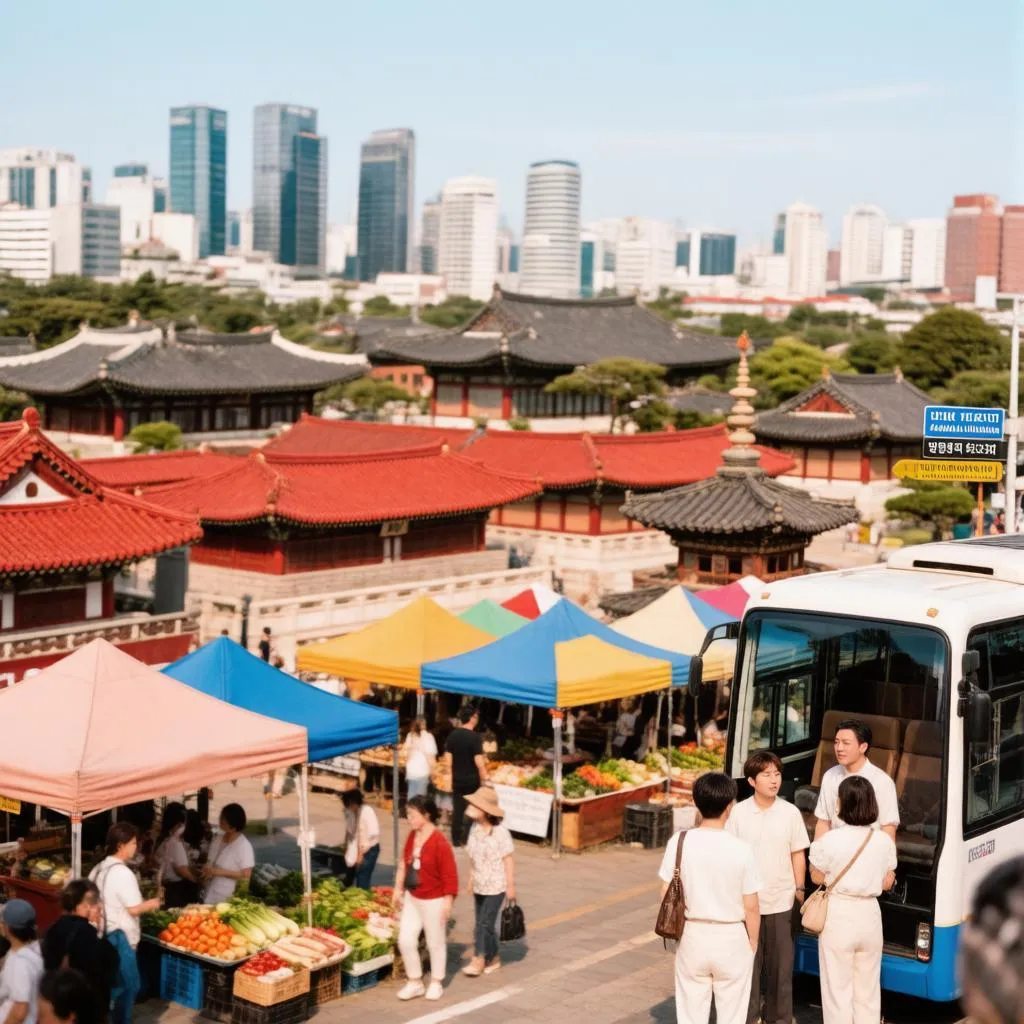
Seoul has a habit of surprising people who thought they knew what they were coming for. Visitors arrive expecting technology and neon, and find six-hundred-year-old palace walls; they arrive expecting a hyper-modern capital and discover mountain hiking trails that begin at subway stations, night markets that stay open until the last train, and a demilitarised zone an hour north that has become one of the most unusual tourist destinations on the planet. Five days is the honest sweet spot for this city: long enough to cover the palaces and the history, the markets and the food, the modern districts and the DMZ, without the punishing pace that four days imposes or the idle drift of a full week. The city also runs on infrastructure so reliable that planning is less about logistics and more about sequencing — get the order right, and Seoul delivers itself almost effortlessly.
How the city is organised, and why it matters
Seoul’s geography follows the Han river, which slices the capital into north and south halves with distinct personalities. The north holds the historic core: the five royal palaces, the hanok villages, the fortress wall, the old markets and most of the landmarks visitors picture. The south holds the modern engine: Gangnam’s towers and shopping, the Han river parks, the tech and entertainment districts. The subway connects everything with mechanical precision, which turns Seoul into a city where the main planning question is not “how do I get there?” but “what should each day hold?”
A well-structured five days usually follows a north-first, DMZ-mid, south-last logic:
- Day 1 — the royal core: Gyeongbokgung palace and the changing of the guard, Bukchon’s hanok lanes, and Insa-dong’s craft shops.
- Day 2 — Changdeokgung and its secret garden, the Ikseon-dong alleyways, and Cheonggyecheon stream at dusk.
- Day 3 — the DMZ day trip, returning to Seoul by late afternoon for a quiet neighbourhood evening.
- Day 4 — markets day: Gwangjang for street food, Mangwon for atmosphere, and Namdaemun for the city’s commercial heartbeat.
- Day 5 — modern Seoul: Gangnam, the Han river park, and Hongdae or Myeongdong for the final night.
The DMZ slot in the middle is deliberate rather than arbitrary. The tour pickups leave from central Seoul in the morning, most full-day programmes return by mid-afternoon, and sandwiching the trip between two relaxed days keeps the holiday’s rhythm from snapping under the early alarm.
Day one: the royal core and its neighbourhoods
Gyeongbokgung, the principal palace of the Joseon dynasty, opens the trip with its best theatrical moment: the changing of the royal guard ceremony at the main gate, held in the morning with drums, colourful uniforms and a crowd that thins dramatically in the first fifteen minutes. Inside the walls, the palace complex unfolds in axial order — throne halls, king’s quarters, the elegant pavilion on the artificial lake — and renting a hanbok, the traditional dress, is not a novelty gimmick but a practical hack: hanbok wearers enter the palaces free and photograph beautifully against the architecture.
From Gyeongbokgung the day flows on foot. Bukchon Hanok Village, the preserved quarter of traditional tile-roofed houses, sits between the two palaces and rewards early arrival — by late morning its narrow lanes fill with photographers, and some alleys now carry visitor limits to protect residents. Insa-dong, the craft and tea district, closes the afternoon with pottery shops, calligraphy studios and tea houses where cinnamon punch is served in brass bowls. The evening belongs to Gwanghwamun square and the Cheonggyecheon stream, the restored waterway where city workers unwind along stepping stones after work — a scene that explains Seoul’s pace better than any museum.
Day two: the scholars’ palace and the alleys
Changdeokgung, the second and best-preserved of the great palaces, is where the Joseon kings actually preferred to live, and its hidden difference is the Huwon, the secret garden. Guided tours of the garden run several times daily and require a timed ticket; the garden’s ponds, pavilions and ancient trees were built for a philosophy that treated landscape as an extension of architecture, and walking them explains Korean aesthetics more efficiently than any gallery.
The rest of day two belongs to Ikseon-dong, the maze of hanok alleys converted into one of Seoul’s most charming café quarters, and to the streets of Jongno, where herbal medicine shops, knife sellers and century-old eateries sit beside third-wave coffee roasters. The evening can climb Naksan or N Seoul Tower for the skyline panorama, or simply wander — Seoul’s evenings are best experienced unplanned, with the smell of grilled meat pulling the walker from street to street.
Day three: the DMZ, the strangest border on earth
The Demilitarised Zone deserves its reputation as a place unlike any other. The strip of land separating the two Koreas, created in 1953 at the armistice line, has become an accidental wildlife refuge and a geopolitical open wound at the same time. Tours from Seoul run daily and are the only legal way for visitors to enter, and the standard programme covers a coherent set of stops:
- Imjingak park — the Freedom Bridge and the border observatory area, where families separated by the war gather and memorials stand.
- The third tunnel — one of the infiltration tunnels discovered under the border in the 1970s, now walked partway by visitors in hard hats.
- Dora Observatory — the viewpoint over the DMZ itself and, on clear days, the North Korean towns of Gaeseong and Gaepung-gun.
- Dorasan station — the northernmost railway station of the South, built for a reunification that has not yet happened.
Choosing a tour matters more than choosing a day. The programmes differ in depth: half-day trips cover the observatory and a tunnel, while full-day itineraries add lunch, the Korean War museums or, in some cases, JSA visits when access is permitted. Two rules hold across every option: passports are mandatory and checked at multiple points, and dress codes are enforced — no ripped jeans, shorts, sandals or military-style clothing, a regulation that surprises unprepared travellers at the bus door. Booking ahead is essential, because daily visitor numbers are capped and weekends sell out weeks in advance.
The DMZ visit lands differently than expected. Travellers arrive expecting tension and often leave struck by something else: the surreal quiet of a landscape frozen in time, rice fields stretching to the horizon in view of both countries, and the strange mixture of tourism, memorial and geopolitics that the zone has become. Returning to Seoul by late afternoon, the contrast between the world’s most fortified border and the world’s most caffeinated city is precisely the point — and the evening afterwards is best kept deliberately simple: a neighbourhood restaurant, a quiet street, and the space to absorb the morning.
Day four: the markets that feed the city
Seoul’s markets are the city’s memory made edible, and a full day devoted to them rewards travellers more than any second palace visit. The anchors work in sequence and in contrast:
| Market | Character | Best for | Timing |
|---|---|---|---|
| Gwangjang Market | Century-old food hall under one roof | Bindaetteok pancakes, mayak gimbap, raw beef tartare | Midday, before the queues peak |
| Mangwon Market | Neighbourhood market along the Han | Tteokbokki, dried seafood, local snacks | Early afternoon, local rhythm |
| Namdaemun Market | Korea’s largest traditional market | Kitchenware, clothing, mountains of street food | Morning through dusk |
| Tongin Market | Small market with a lunchbox experiment | Filling a traditional dosirak box with brass coins | Early lunch only |
| Dongdaemun Night Market | Late-night fashion and food zone | Street food after dark, shopping, the design plaza | After eight in the evening |
The strategy that works is one dish per stall and no full meal anywhere. Gwangjang’s bindaetteok — a crisp mung-bean pancake fried on the spot — and its mayak gimbap, “narcotic gimbap” in the local nickname, earn their reputations; Mangwon’s tteokbokki stalls show the neighbourhood version of the national snack; and Namdaemun’s kalguksu noodle houses serve bowls that cost less than a subway ticket. The day’s rhythm of grazing rather than dining turns a market visit into a six-course meal spread across the city, and the evening Dongdaemun stop closes it with the lights-on version of the same food culture.
Day five: modern Seoul and the farewell evening
The final day belongs to the century Seoul built for itself. Gangnam — made globally famous by a song but substantively defined by corporate towers, shopping arcades and the COEX complex — shows the city’s economic face; the Han river parks, just across the water, show its leisure face, where families picnic on mats, convenience stores rent camping chairs, and the ramyeon machines by the river serve bowls with a skyline view. Bongeunsa temple, rising between the towers of Samseong-dong, offers the day’s quietest half-hour and the city’s most photographed contrast of old and new.
The farewell evening splits by personality, and both options are correct:
- Hongdae — the university district’s street performances, indie bars, endless restaurants and the youthful energy that defines Seoul after dark.
- Myeongdong — the shopping heart with skincare stores at every corner, food stalls along the pedestrian streets, and the classic last-night shopping spree.
Either way, the night should end early enough to catch the last trains — Seoul’s subway runs until around midnight, and the city’s taxis, while efficient, are the priciest form of transit after the evening peak.
Practical notes that carry the trip
Seoul forgives most planning mistakes but rewards a handful of habits enormously. These are the details that separate smooth weeks from frustrating ones:
- Get a T-money card on arrival — the rechargeable transit card works on subway, buses and taxis, and saves the friction of single tickets entirely.
- Book the DMZ tour and the secret garden in advance — the two genuinely capacity-limited experiences of the itinerary; everything else is walkable or bookable on the day.
- Time the palaces for the mornings — the guard ceremony, the light and the crowds all align before eleven; the palaces close on different weekdays, and checking which one closes matters before sequencing the days.
- Learn three food words — “hansik” for Korean food, “yeogiyo” to call staff, and “gimbap” for the universal snack; Seoul’s friendliness covers the rest.
- Carry some cash — cards dominate, but the market stalls and small eateries prefer notes, and the coins add up pleasantly in the souvenir jar.
- Download the offline map and a subway app — the coverage is excellent, but the underground stations and the DMZ bus zones test any signal.
None of this costs more than an hour of preparation, and the payoff is a city that behaves like a well-run machine the moment the traveller matches its rhythm.
Season, budget and the final verdict
Timing shapes Seoul more than most capitals, because the city has four emphatic seasons. Spring’s cherry blossoms and autumn’s foliage turn the palaces and the river parks into their best versions, while the humid summer pushes sightseeing into mornings and the sharp winter tests commitment in exchange for crowds thin enough to have Gyeongbokgung nearly to oneself. The shoulder seasons of late April and late October are the consensus favourites, and for good reason.
Budgeting five days is mercifully simple: mid-range travellers spend roughly 90,000 to 150,000 won per person daily on food, transport and entries, with accommodation between 70,000 and 150,000 won for a decent hotel room; the DMZ tour runs 50,000 to 90,000 won depending on the programme; and the palaces cost a few thousand won each, or nothing with a hanbok. The city’s eating and transit arithmetic means the two splurges worth making — a hanok stay for one night and a proper Korean barbecue dinner — fit inside almost any budget without sacrificing elsewhere.
Five days in Seoul ends the way the city itself works: precisely and warmly. The traveller who started at a royal gate with drums, stood in a tunnel under the world’s most armed border, ate a century-old pancake in a market hall and finished on a riverbank with the towers lighting up across the water has covered not just an itinerary but a compressed portrait of Korea itself — its history, its wound, its appetite and its energy. The city rewards exactly this kind of attention, and the last train home on the fifth night carries the pleasant certainty that five days was enough to understand Seoul, and just enough to promise a return.